
Building on Solana used to mean one thing: a public RPC endpoint and a lot of parsing. You pulled raw account data, decoded it yourself, and priced tokens with a separate feed.
That era is over. In 2026, “Solana API” covers several distinct layers. Some providers return enriched wallet and portfolio data as clean JSON. Others specialize in DEX liquidity, explorer lookups, or millisecond-level streaming. The newer wave ships MCP servers, so AI agents can query Solana data without custom glue.
We spend a lot of time on the data side of crypto. So we worked through the Solana providers worth knowing in 2026. Five made the cut. Each occupies a different slot in the stack. The goal isn’t a strict head-to-head ranking. It’s a map of what each does best, so you can pick based on your actual workload.
One note on scope before the list. CEX.IO Trading API covers a different layer: exchange trading and account automation. The APIs below cover the onchain layer, meaning public Solana addresses, tokens, and programs. Many production stacks use both. For the broader landscape, see our top crypto data API providers guide and our best crypto wallet API breakdown.
What Solana APIs Usually Cover
A modern Solana API typically handles one or more of these:
- Wallet and portfolio data: SPL token balances, SOL, transaction history, DeFi positions
- Market data: token prices, OHLCV, trading volume, liquidity
- DEX and pool data: AMM pools, TVL, swap routing
- Explorer data: transaction lookups, account activity, program interactions
- Node-level access: RPC reads and writes, gRPC streaming, webhooks
- AI integration: MCP servers and structured tools for LLM agents
Most production apps combine two or three. Picking well means knowing which layer each provider owns.
How We Picked These Five
We looked at production traction, documentation quality, pricing transparency, and how each handles the AI-agent use case. We also cross-checked developer roundups, like this Solana API breakdown on dev.to, which land on a similar shortlist. Each provider below occupies a distinct slot you can build a real product on.
1. CoinStats API
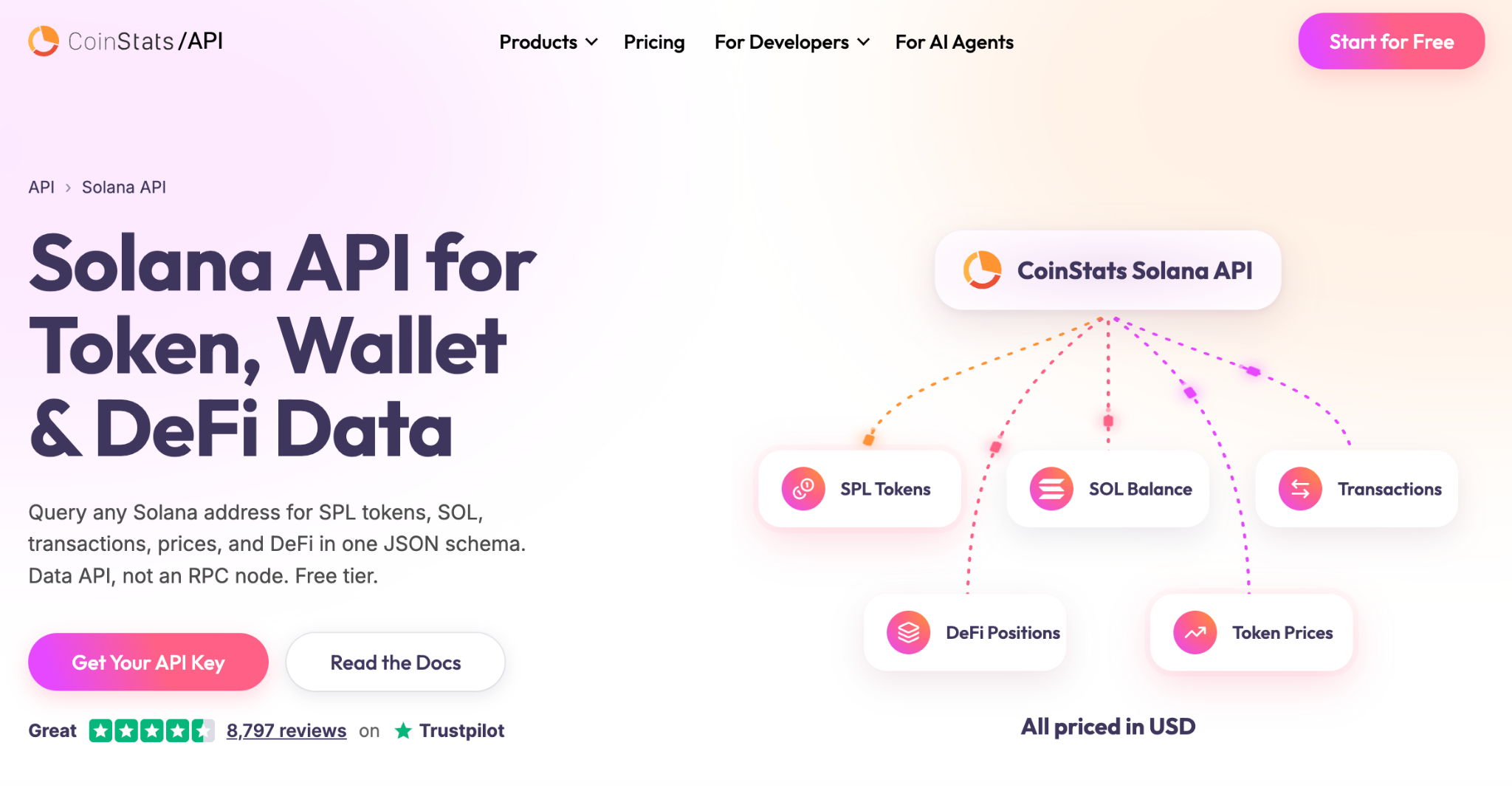
CoinStats Solana API combines wallet, portfolio, and DeFi data into a single API. Pass any Solana address and get structured JSON back: SPL tokens, SOL, transaction history, and DeFi positions, each priced in USD. Solana is one of 120+ chains served through one schema, so a Solana address, a Bitcoin xpub, and an EVM wallet aggregate into one portfolio view.
Two features differentiate the platform. First, DeFi position resolution across 10,000+ protocols. Positions on Solana’s biggest DeFi protocols, like Jito and Marinade staking, Kamino lending, and Raydium or Orca LPs, surface automatically per wallet. Second, CoinStats MCP Server. It exposes 20+ wallet, DeFi, and portfolio tools to AI agents like Claude and Cursor. The same API key works for REST and MCP.
According to CoinStats, the infrastructure also powers the CoinStats app, which serves more than 1 million monthly users. Pricing is credit-based, with a free tier of 20,000 credits per month. The team also published a deeper breakdown of the best Solana APIs.
Best for: portfolio trackers, tax tools, multi-chain wallet apps, and AI crypto assistants. Suitable for developers looking for wallet, transaction, DeFi, and pricing data through one API.
2. Raydium API
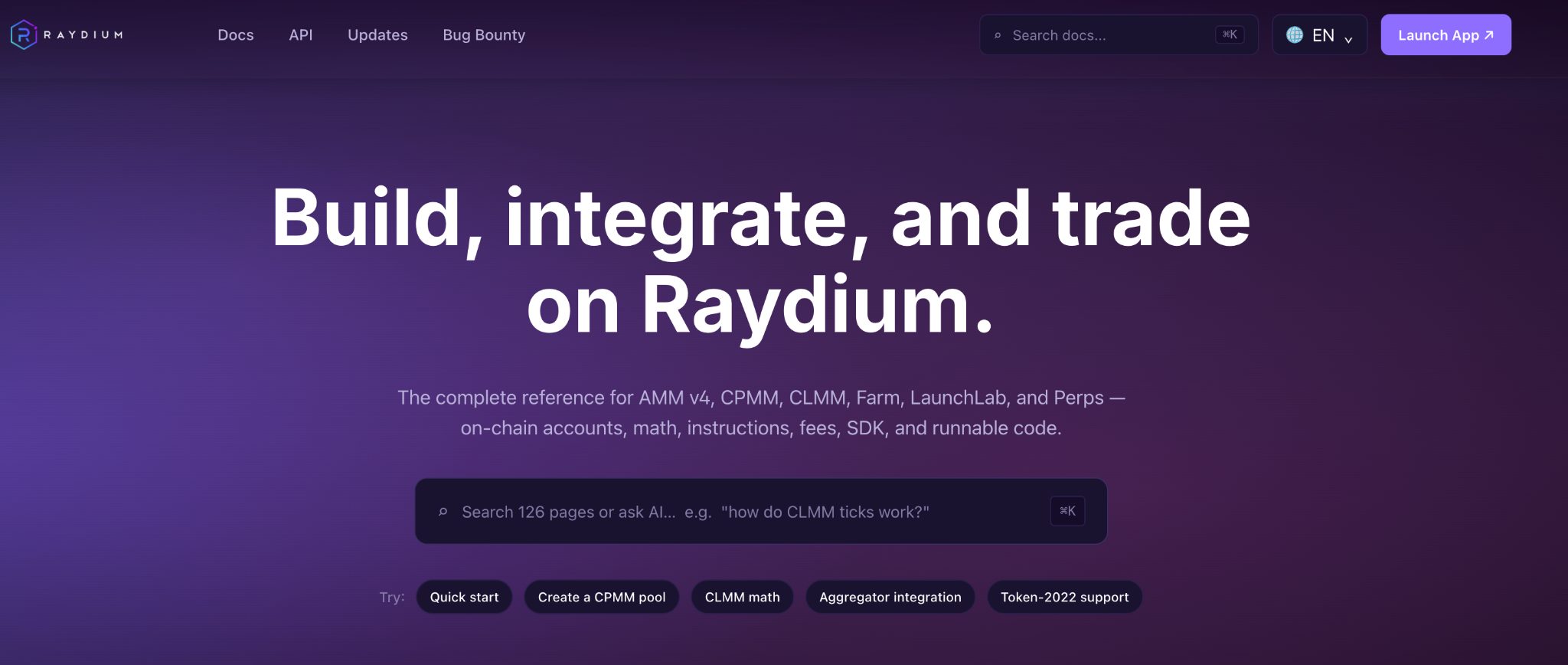
Raydium API covers the DEX-native slot. Raydium is one of Solana’s largest AMMs, and its public V3 API serves the protocol’s own data. Pool lists, TVL, 24-hour volume, mint prices, and CLMM and CPMM pool details all come back as read-only JSON. No API key is required.
There’s also a Trade API layer for builders integrating swaps. It handles quoting and transaction building against Raydium liquidity.
The limits are worth knowing. Raydium positions the API for monitoring and quick data access, not real-time tracking. Requests run behind Cloudflare with progressive rate limiting, and heavy integrators need to contact the team. For sub-second pool tracking, pair it with a streaming provider like Shyft below.
Best for: DEX dashboards, pool and farm analytics, and swap integrations built on Raydium liquidity.
3. Codex
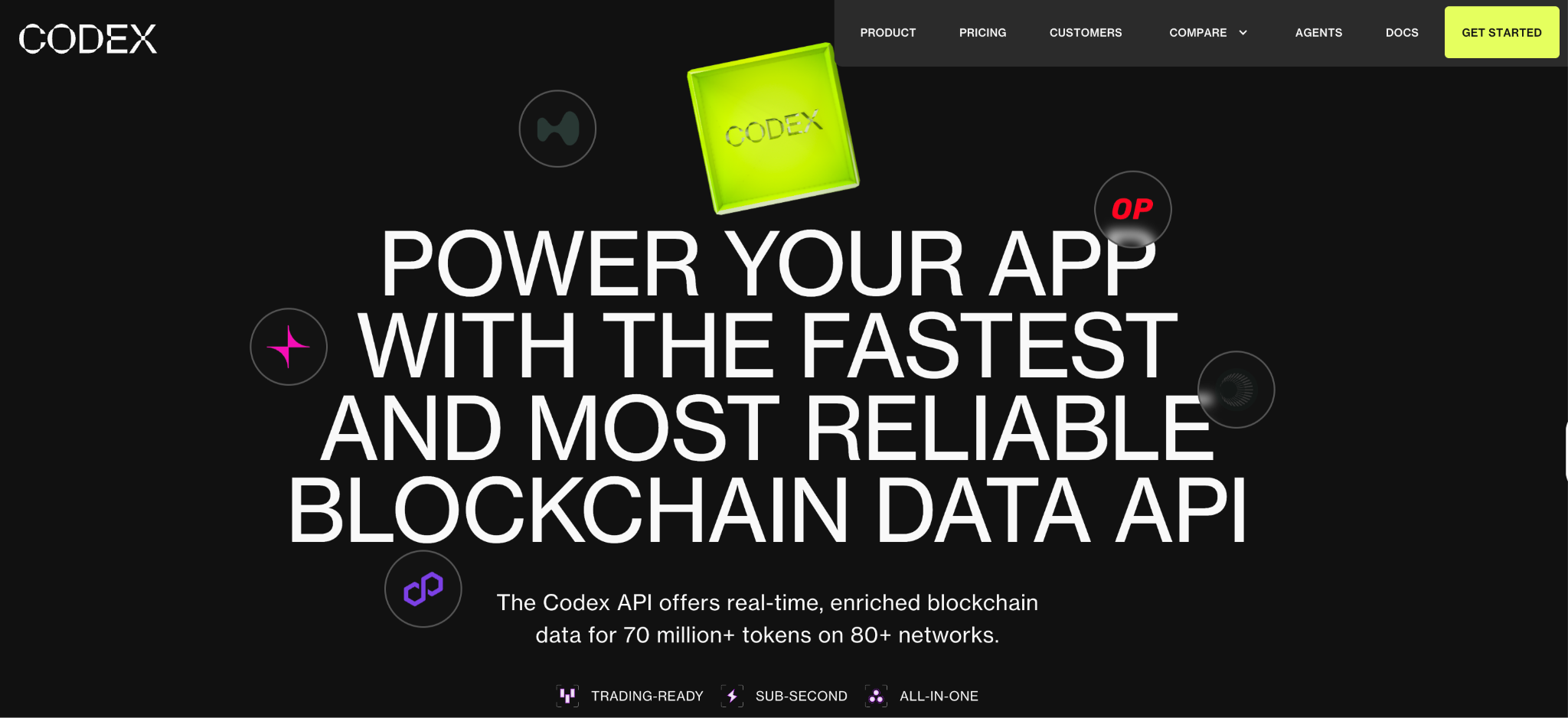
Codex covers the enriched token data slot. It reads Solana markets without the RPC parsing: real-time USD prices, OHLCV charts, holder analytics, aggregated volume, and new-launch tracking across launchpads like Pump.fun. Data lands with 1-second freshness, and WebSocket subscriptions handle live feeds.
The developer surface is modern: GraphQL, a TypeScript SDK, and an MCP server for AI agents. The client list is serious too. Codex powers token data for TradingView, Coinbase, and Uniswap. Beyond Solana, the same API covers 80+ networks, so a Solana-first app can expand without switching providers.
Codex doesn’t resolve DeFi positions or serve explorer-grade lookups. Its lane is fast, enriched market data. A free tier includes 10,000 requests per month, and the Growth plan starts at $350 per month.
Best for: trading terminals, token screeners, launchpad and memecoin analytics, and price-chart features.
4. Solscan API
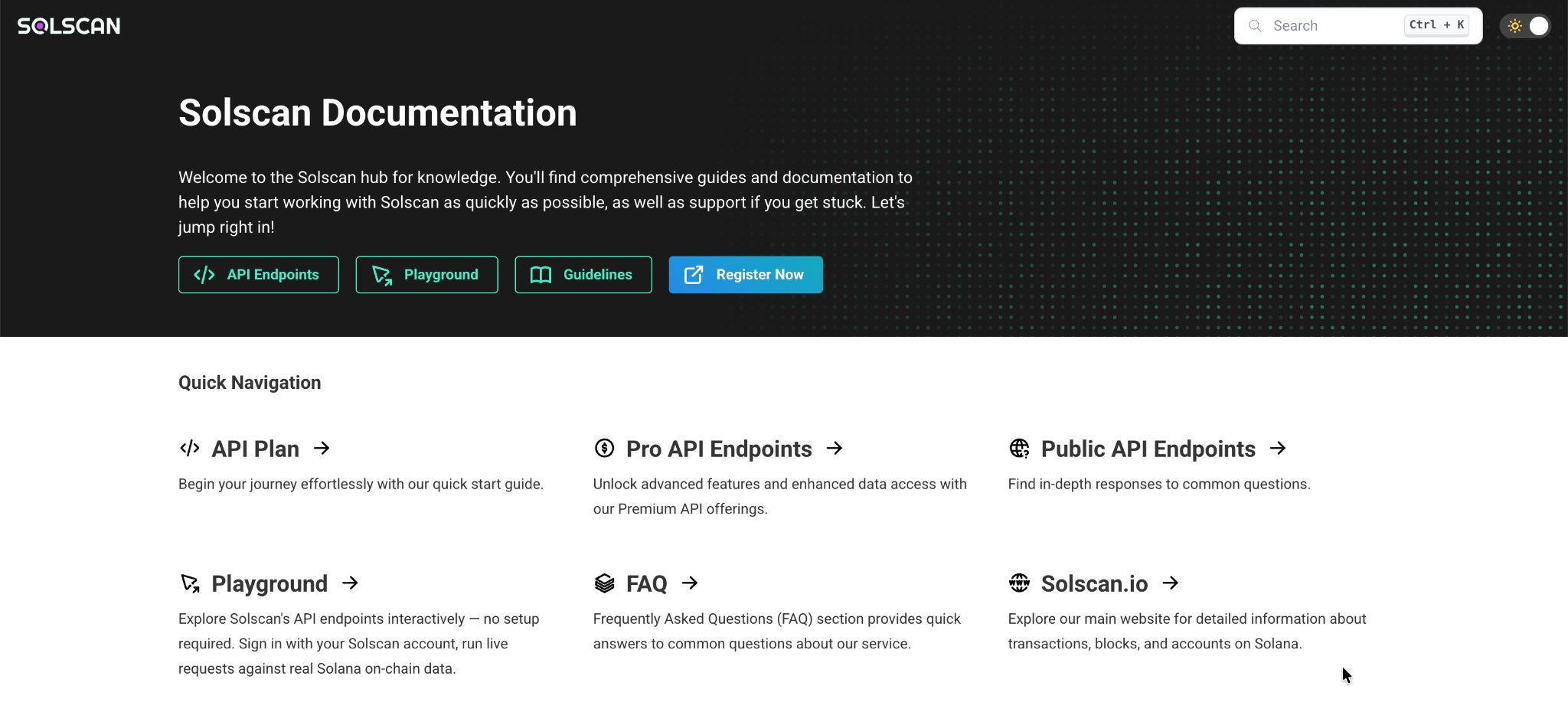
Solscan API exposes data from the leading Solana block explorer. The Pro API V2 covers account activity, token holdings and transfers, transaction details, and DeFi activity endpoints. If you’ve used Solscan’s web explorer, this is the same data as structured JSON.
The API splits into a free public tier with reduced limits and a paid Pro tier. Pro usage is metered in compute units, with each V2 endpoint costing a flat 100 CUs. Pro plan pricing runs through the Solscan sales team rather than published tiers.
The fit is explorer-style queries. Address dashboards, transaction lookups, and token-holder breakdowns are its core strengths. It reads Solana precisely and nothing else.
Best for: explorer features, transaction and account lookups, and research tools that need Solscan-grade detail.
5. Shyft
Shyft is Solana-only infrastructure, built for speed. The core products are staked RPCs across seven global regions, Yellowstone gRPC streaming, and RabbitStream, which reads transaction signals from shreds roughly 10ms before standard gRPC. On top of that sit parsed transaction history APIs, callback webhooks, and GraphQL indexers for program data.
The pricing model is unusual for the category: no credits and no bandwidth metering on streams. A free tier covers prototyping, and unlimited streaming plans start at $199 per month. Parsing examples ship ready-made for Raydium, Pump.fun, Jupiter, and Meteora.
Shyft returns raw and parsed chain data rather than priced portfolios. Most teams pair it with a data API like CoinStats upstream.
Best for: trading bots, MEV and latency-sensitive workloads, real-time pool monitoring, and custom indexers.
Comparison at a Glance
| Provider | Layer | Coverage | Streaming | MCP / AI | Free tier |
| CoinStats API | Market + Wallet + portfolio data | 120+ chains | No | Native MCP Server | Yes |
| Raydium API | DEX + pool data | Raydium on Solana | No | No | Yes |
| Codex | Market + token data | Solana + 80 more | WebSocket | MCP server | Yes |
| Solscan API | Explorer data | Solana | No | No | Yes |
| Shyft | RPC + streaming | Solana | gRPC + shreds | No | Yes |
How to Pick
For many common Solana applications, CoinStats provides wallet, transaction, DeFi, and pricing data through a single integration. More specialized workloads may benefit from combining it with providers such as Shyft for low-latency streaming or Raydium for DEX-specific functionality.
A few questions to guide the choice:
- What kind of data do you need? Wallet balances, portfolio aggregation, and DeFi positions: CoinStats: CoinStats. Pool and swap data: Raydium. Enriched token and market data: Codex. Explorer lookups: Solscan. Raw chain access and streaming: Shyft.
- How fast does it need to be? For millisecond-sensitive workloads, Shyft’s gRPC and shred streams lead. For everything else, REST is fine.
- Are AI agents in your stack? CoinStats and Codex ship MCP servers. CoinStats pairs its server with wallet, DeFi, and portfolio tools.
- What pricing model fits? Credit-based (CoinStats, Solscan Pro), subscription (Codex), flat unlimited plans (Shyft), or free public endpoints (Raydium). All five offer a free way in; this curated list of free crypto APIs on GitHub tracks the wider category.
For developers looking for a single integration covering wallet, transaction, DeFi, and pricing data, CoinStats offers a broad feature set. Independent expert reviews of the leading crypto data APIs reach the same verdict. Teams that later need launchpad-level market data or low-latency streaming add Codex or Shyft alongside it.
FAQ
What is the difference between a Solana data API and a Solana RPC?
An RPC is your gateway to a node. You read raw network state, submit transactions, and handle parsing and pricing yourself. A data API does that work upstream and returns enriched, readable JSON. Use an RPC or streaming provider like Shyft to write to the chain. Use a data API, such as CoinStats, when you need enriched wallet and portfolio data without parsing raw blockchain state yourself.
What is the difference between a Solana API and an exchange API?
A Solana API reads public onchain data: addresses, tokens, pools, and programs. An exchange API, like CEX.IO Trading API, accesses exchange accounts and trading functions. The first covers self-custody assets on the chain. The second covers assets held on a trading platform.
Can AI agents use Solana APIs?
Yes, through MCP servers. CoinStats API ships a native MCP Server with wallet, DeFi, and portfolio tools that cover Solana. AI assistants like Claude and Cursor query balances and positions through natural language, with no custom integration code.
The web content provided by CEX.IO is for educational purposes only. The information and tools provided neither are, nor should be construed as, an offer, or a solicitation of an offer, or a recommendation, to buy, sell or hold any digital asset or to open a particular account or engage in any specific investment strategy. Digital asset markets are highly volatile and can lead to loss of funds.
The availability of the products, features, and services on the CEX.IO platform is subject to jurisdictional limitations. To understand what products and services are available in your region, please see our list of supported countries and territories. This page includes additional links to information about individual products, and their accessibility.

You can get bonuses upto $100 FREE BONUS when you:
💰 Install these recommended apps:
💲 SocialGood - 100% Crypto Back on Everyday Shopping
💲 xPortal - The DeFi For The Next Billion
💲 CryptoTab Browser - Lightweight, fast, and ready to mine!
💰 Register on these recommended exchanges:
🟡 Binance🟡 Bitfinex🟡 Bitmart🟡 Bittrex🟡 Bitget
🟡 CoinEx🟡 Crypto.com🟡 Gate.io🟡 Huobi🟡 Kucoin.






Comments